The OEM vs aftermarket parts decision can look simple until a repair estimate gives you choices. One option may cost more and come through the vehicle maker’s parts network; another may cost less and come from an independent supplier. The right answer depends on fit, quality, warranty, safety systems, and how long you plan to keep the car.
At Motorist Assurance Program, we help drivers ask clearer questions before approving repair work. Our Find My Shop tool can also help you connect with a MAP participating facility that follows consistent inspection and communication standards. Around Woodridge, winter salt, potholes, and I-355 or I-88 commutes can all affect parts wear.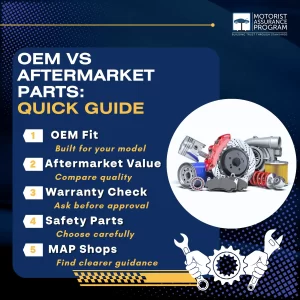
OEM vs Aftermarket Parts: What the Choice Really Means
Before you approve a repair, ensure that you know what kind of part is being offered. Neither option is automatically right for every vehicle. A good shop should explain why the part fits the repair, not just name the price.
What OEM parts are
OEM car parts are made by, or for, the company that built your vehicle. They are designed to match the original part’s fit and function. That can help when exact fit, electronics, finish, or warranty coverage are part of the decision.
OEM parts often cost more, and availability can vary. Still, they may reduce uncertainty on repairs where a poor fit could lead to noise, leaks, warning lights, or repeat visits.
What aftermarket parts are
Aftermarket car parts are made outside the vehicle manufacturer’s parts channel. Some are basic economy parts, while others are premium options that may perform well for routine repairs.
Quality varies, so ask about the part brand, warranty, and why the shop recommends that option. MAP’s Vehicle Education resources can help you understand the system being repaired before you approve the work.
When OEM Car Parts Are Usually the Safer Choice
Some repairs leave little room for guesswork. Paying more upfront may help avoid fit issues, communication problems, or warranty confusion later.
Warranty, recalls, and newer vehicles
Aftermarket parts do not automatically void a vehicle warranty. Still, a warranty claim may be harder if a non-OEM part or installation problem caused the failure.
Recall repairs are different. If the issue is tied to an open safety recall, check the recall first and follow the manufacturer’s repair path. MAP’s Recall Look Up resource is a useful place to begin.
OEM may also be cleaner for newer, leased, or visible parts where fit and finish matter.
Electronics, sensors, and safety systems
Modern vehicles rely on sensors, modules, cameras, and driver assistance systems. OEM may be safer when the part must work with software, calibration needs, and safety logic.
Ask whether the part requires programming, calibration, or a specific part number. That question is especially important for safety-related systems, emissions components, and some electrical repairs.
When Aftermarket Car Parts Can Make Sense
Aftermarket parts can be a smart choice when quality is clear and the repair does not require a manufacturer-specific component. Compare value, not just price.
Routine wear items and older vehicles
Brake pads, rotors, filters, belts, batteries, wiper blades, shocks, struts, and some suspension parts may have strong aftermarket options. Salt residue, potholes, and stop-and-go traffic can make these wear items a recurring concern.
For older vehicles, OEM availability may be limited or expensive. For older vehicles around Woodridge, IL, a practical fit for the repair, vehicle condition, and ownership plan matters more than brand loyalty.
Repairs with clear quality and warranty support
Aftermarket may be reasonable when the shop can show you the part brand, explain the warranty, and confirm the fit. That is why auto repair parts in Woodridge, IL, should be discussed with the full repair in mind.
Local winter roads, wet commutes, and short trips can change how fast brakes, batteries, suspension parts, and cooling parts wear.
Questions to Ask Before Approving Replacement Parts
A good parts conversation should be clear, not rushed. Ask what part is recommended, whether it is OEM, aftermarket, remanufactured, or used, and why that option fits your vehicle.
Ask what warranty comes with parts and labor, whether coverage or recalls are involved, and whether programming, calibration, or follow-up testing is needed. These questions help compare part quality, warranty terms, and installation quality.
How Local Driving Conditions Affect the Decision
Parts decisions should reflect how and where you drive. A commuter using I-355, I-88, or local roads through Woodridge, Naperville, Bolingbrook, and Downers Grove may care more about durability than the lowest estimate.
Winter salt can speed corrosion. Spring potholes can stress steering and suspension parts. Hot summer traffic can raise the load on cooling and electrical systems. MAP’s Vehicle Systems section explains major systems, and our guide on how to check your vehicle’s suspension system is helpful after rough-road driving.
Takeaways
There is no single parts choice that fits every repair. OEM may be best for exact fit, newer vehicles, recalls, warranty-sensitive work, and electronic systems. Aftermarket may make sense for many wear items, older vehicles, and repairs where quality and warranty are easy to verify.
The best move is to ask clear questions before you approve the job. If the shop can explain the part, the reason, the warranty, and the expected result, you are in a better position to choose with confidence.
Frequently Asked Questions
Are OEM parts always better than aftermarket parts?
No, OEM parts are not always better than aftermarket parts. OEM parts are often best for exact fit, newer vehicles, warranty-sensitive repairs, and certain electronics. Aftermarket parts can also be high quality when the brand, fit, and warranty are clear.
Will aftermarket parts void my vehicle warranty?
Aftermarket parts do not automatically void a vehicle warranty. A claim may be denied if the aftermarket part or its installation caused the failure being claimed.
Should I choose OEM parts for brakes?
You should not always choose OEM parts for brakes. Many brake repairs can use quality aftermarket parts. Ask about noise, dust, stopping performance, and warranty before you approve the work.
Are remanufactured parts the same as aftermarket parts?
No, a remanufactured part is a used component rebuilt to meet certain standards. An aftermarket part is usually newly made by a non-OEM supplier.
What should I do if the shop will not explain the part choice?
Do not approve the repair until you understand the recommendation. A trustworthy facility should explain the part type, why it fits the repair, and what support comes with it.
Find Clear Parts Guidance with Motorist Assurance Program
The OEM vs aftermarket parts choice is easier with a clear inspection, a plain-language explanation, and a shop willing to discuss options before work begins. Motorist Assurance Program helps drivers make informed repair decisions through education, standards-based communication, and participating facility tools.
For help finding a MAP participating facility or learning more about repair and maintenance standards, contact us at (847) 947-2650 or visit us at 3321 Hobson Road, Suite A, Woodridge, Illinois 60517.