Buying a used car feels great until you start wondering what the previous owner skipped. A used car maintenance checklist helps you reset the vehicle’s care history, catch early warning signs, and make smart service decisions before small issues grow. Motorist Assurance Program helps drivers understand vehicle systems, maintenance needs, and repair conversations. Our Find My Shop resource can also help you locate a participating facility when you want professional guidance.
Your Used Car Maintenance Checklist Starts With a Baseline
A newly purchased used car needs a clean starting point. Even if it passed a test drive, you may not know how it was maintained. You also may not know how often it sat or which parts are near the end of their service life.
Review the Vehicle History First
Start with records, receipts, the owner’s manual, and any vehicle history report you have. Look for oil changes, brake work, tire replacement, coolant service, transmission service, battery age, and previous inspections.
Missing records do not imply that the work was never done, and clean records do not guarantee everything is current. Treat the paperwork as a guide, then confirm the vehicle’s real condition.
Get an Inspection Even If the Car Drives Well
A used car inspection after purchase is still useful because it gives you a current picture of the vehicle. A technician can check brakes, tires, steering, suspension, leaks, warning lights, belts, hoses, fluids, and visible safety concerns.
MAP’s Pre-Purchase Vehicle Inspection video is also helpful after the sale because it explains the inspection mindset: identify hidden issues, understand future needs, and make decisions with more confidence.
What Maintenance Does a Used Car Need First?
A clean answer to what maintenance a used car needs begins with the items that affect safety, reliability, and the cost of ownership. You do not need to replace everything right away, but you do need to know what is due now.
Fluids and Filters
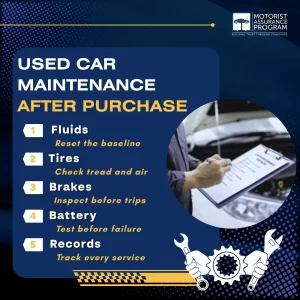
Treat maintenance after buying a used car as a reset. Check engine oil, coolant, brake fluid, transmission fluid where applicable, power steering fluid if equipped, and washer fluid. If fluid condition or service history is unclear, ask a qualified shop what should be tested, topped off, exchanged, or left alone.
Filters matter too; engine air filters, cabin air filters, oil filters, and fuel filters protect performance, air quality, and system life. MAP’s article on Fluids, Filters & Timelines is a good supporting resource for building a service rhythm.
Tires, Brakes, Battery, and Belts
Tires should be checked for tread depth, uneven wear, sidewall damage, age, and proper pressure. Brakes should be inspected for pad thickness, rotor condition, leaks, pedal feel, and noise. A car that stops well on a short test drive may still have worn parts.
The battery should be tested, especially before winter or summer heat. Belts and hoses should be checked for cracks, swelling, leaks, or soft spots. For more system-level education, MAP’s Vehicle Education resource explains why scheduled maintenance and records help protect safety, reliability, and resale value.
Set Your Maintenance Plan Around Local Driving Conditions
Maintenance should match how and where you drive. A used car with easy highway miles may need different attention than one used for short trips, winter commuting, or daily stop-and-go errands.
Woodridge, Chicagoland Weather, and Road Salt
For used car maintenance in Woodridge, IL, local conditions can add wear. Winter road salt can affect brake hardware, suspension parts, underbody components, and wheel areas. Spring potholes around the Chicago suburbs can contribute to alignment issues, tire damage, and steering concerns.
If you need a used car inspection in Woodridge, IL, ask for more than a quick look. A helpful inspection should connect local driving conditions to the vehicle’s actual condition.
Commuting, Short Trips, and Stop-and-Go Wear
Driving near I-355, I-88, and busy suburban routes can imply cold starts, short trips, traffic, braking cycles, and heat buildup. These patterns can be hard on batteries, brakes, tires, fluids, and engine oil.
Use your owner’s manual as the base, then adjust for real driving. Severe-service schedules may apply if you drive mostly short trips, carry heavy loads, idle often, or deal with frequent temperature swings.
Check Recalls, Records, and Safety Items
Before taking long trips, check for open recalls by VIN. MAP’s Recall Look Up resource can help you start that process. Recalls are separate from regular maintenance, but they can affect safety and should not be ignored.
Build a folder for the car, either digital or paper, then save inspection reports, invoices, tire dates, fluid services, battery tests, and repair notes. Clear records help you plan future service and can support resale value later.
Takeaways
A used car maintenance checklist helps you take control after the sale. Start with records, inspections, fluids, filters, tires, brakes, battery health, recalls, and a clear maintenance timeline.
The best plan is not always the biggest repair list. It is the plan that protects safety, matches your driving conditions, and gives you confidence in what the vehicle needs now, soon, and later.
Frequently Asked Questions
Should I change the oil right after buying a used car?
Yes, if the service history is missing or unclear, an oil change is a smart first step. If you have a recent, verifiable record, you can follow the proper interval instead.
Do I need to replace all fluids right away?
You do not always need to replace all fluids right away. Some fluids should be checked, tested, or serviced based on condition, mileage, and manufacturer guidance rather than replaced blindly.
How soon should I inspect the tires and brakes?
Inspect the tires and brakes as soon as possible after purchase. Tires and brakes affect safety every time you drive, so they should not wait until the next routine service.
Is a post-purchase inspection still worth it?
Yes, a post-purchase inspection is still worth it, especially if you bought the vehicle without an independent inspection first. It can help you prioritize immediate needs, future maintenance, and budget planning.
What records should I keep for a used car?
Keep oil changes, fluid services, brake work, tire purchases, inspections, battery tests, recalls, and major repairs records. These records create a clear service history for you and the next owner.
Find Reliable Used Car Maintenance Support with Motorist Assurance Program
Motorist Assurance Program gives drivers clear, practical resources for understanding maintenance, inspections, repair recommendations, and vehicle systems. If you bought a used car and want a more confident next step, use MAP’s Find My Shop tool to look for a participating facility near you.
You can also contact MAP at (847) 947-2650 or visit 3321 Hobson Road, Suite A, Woodridge, Illinois 60517. Bring your records, questions, and concerns so the shop can help you build a realistic plan based on the vehicle’s age, mileage, and condition.
